
European Hub · Botlek, Rotterdam
AOS Rotterdam Botlek Terminal: Oil Storage in Rotterdam
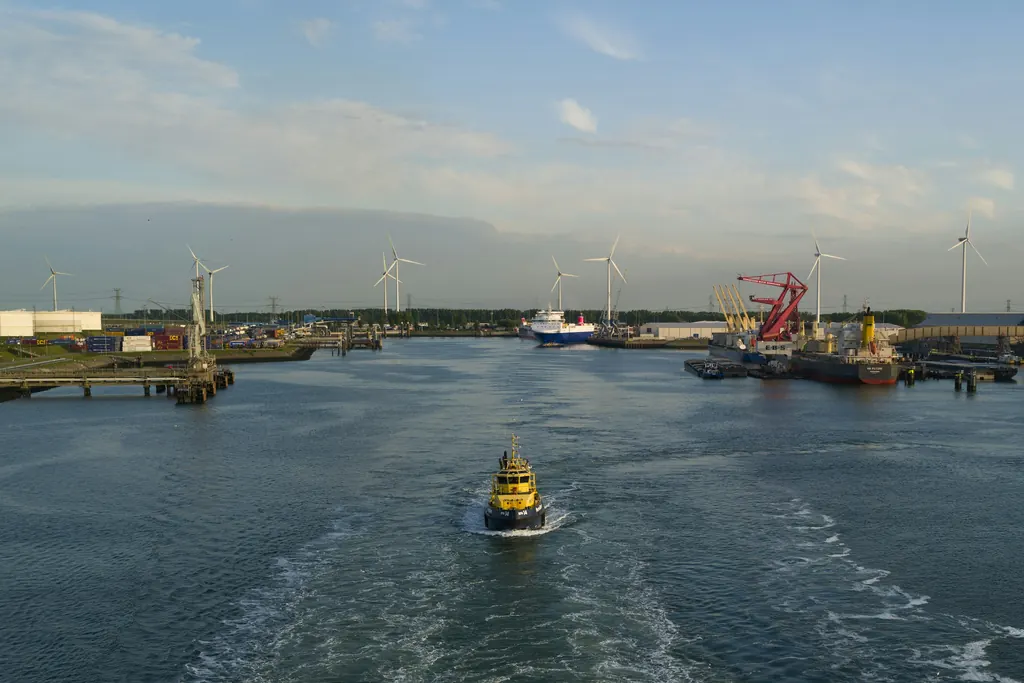
Our European gateway, inside Europe’s largest port and refining cluster. It offers 760,000 m³ of storage for diesel, gasoline, jet fuel and renewable fuel components. Six barge berths serve inland distribution along the Rhine, and a pipeline connects the terminal to the port’s industrial corridor.
760,000 m³
Storage capacity
18
Tanks
4.8 Mt
Throughput (2025)
~1,690
Vessel calls (2025)
Terminal Overview
Europe’s Energy Crossroads
Rotterdam is Europe’s largest port and the centre of the Amsterdam–Rotterdam–Antwerp (ARA) oil trading region. It combines deep-sea access from the North Sea, a dense cluster of refineries and chemical plants, an extensive pipeline network and inland waterways reaching Germany, Switzerland and beyond.
We acquired the Botlek terminal in 2022 as a clean-products facility with 700,000 m³ in 16 tanks. Since then, the Rotterdam Energy Logistics Hub programme has reconfigured the barge berths, added inline biofuel blending and built two dedicated 30,000 m³ biofuel tanks, taking capacity to 760,000 m³.
The terminal’s strengths are flexibility and turnover. Most volume leaves by barge in parcels of 1,000 to 5,000 tonnes, so fast, accurate barge handling matters as much as tank capacity.
Storage Infrastructure
Tank Configuration
| Tanks | Capacity each | Total | Construction | Service |
|---|---|---|---|---|
| 4 | 70,000 m³ | 280,000 m³ | Fixed cone roof | Diesel / gasoil |
| 4 | 45,000 m³ | 180,000 m³ | Internal floating roof | Gasoline and blending components |
| 2 | 45,000 m³ | 90,000 m³ | Internal floating roof | Jet fuel |
| 6 | 25,000 m³ | 150,000 m³ | Internal floating / fixed roof | Blending components, marine gasoil |
| 2 | 30,000 m³ | 60,000 m³ | Fixed roof; nitrogen blanketing; trace-heated lines | Biofuels (FAME, HVO) |
| 18 | 760,000 m³ |
Six 25,000 m³ tanks give flexibility for smaller parcels and blending components
Biofuel tanks use nitrogen blanketing to limit oxidation and moisture pickup, and trace-heated lines to manage the cold-flow properties of FAME
An inline blending skid blends FAME or HVO into diesel during barge loading, with accuracy of ±0.2% by volume
A vapour recovery unit treats vapours displaced during gasoline and component loading
Marine Infrastructure
Built for Barge Turnover
| Berth | Vessel size | Max draft | Max LOA | Typical rate | Use |
|---|---|---|---|---|---|
| Sea Berths 1–2 | Up to 90,000 DWT (subject to draft) | 12.8 m | 250 m | 3,000 m³/h | Seagoing tankers: imports and exports |
| Barge Berths 1–6 | 1,000–10,000 t | 4.5 m | 135 m | 1,000 m³/h per berth | Inland and coastal barges |
Loading and Unloading
- Marine loading arms with emergency release at both sea berths
- Loading arms at two barge berths, upgraded in 2024, and hose connections at the others
- Vapour return at all berths handling gasoline and volatile components
- A barge scheduling system with digital nominations and slot allocation, which has cut average barge turnaround from 14.5 to 10.8 hours
- Up to four barges loading at once, subject to product and line allocation
Pipeline, Inland Waterway and Road
14 km of transfer lines, including a connection to the port’s pipeline corridor serving refineries and chemical plants in the Rotterdam port area
Barge access to the Rhine and Maas, reaching industrial and consumer markets in the Netherlands, Belgium, Germany and Switzerland
Four bays for regional road distribution
Access to the port rail network is under evaluation as part of the renewable fuels expansion
Customers and Strategic Role
Who Uses the Botlek Terminal
- Refiners balancing production and storing export or import product
- Commodity traders active in the ARA market
- Wholesale distributors supplying the Rhine hinterland
- Producers and blenders of biofuels and renewable diesel
- Marine gasoil suppliers
Strategic Importance
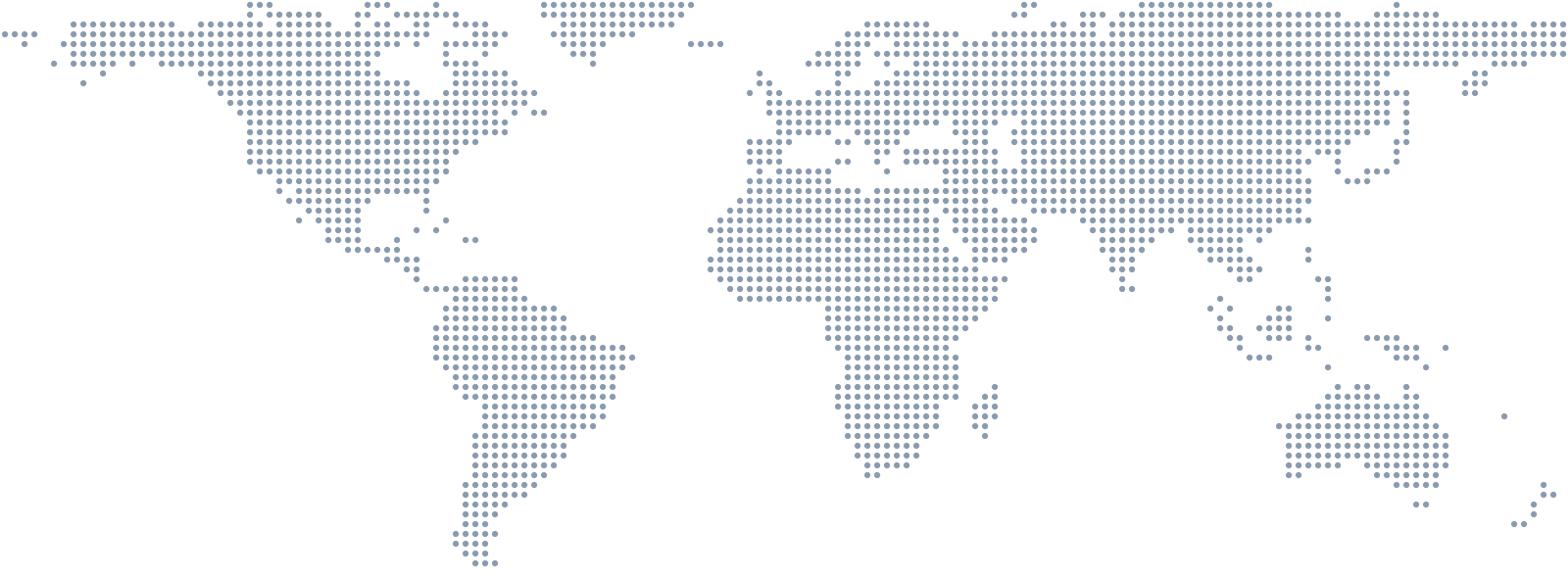
Rotterdam is our European gateway. It links to Houston across the Atlantic, receiving transatlantic flows from Houston, and to Fujairah via Suez or the Cape. It is also the network’s lead site for renewable fuels. The experience we gain here with biofuel handling, blending and certification will shape how we are preparing for lower-carbon fuels at our other terminals.
Connected hubs
Terminal Capabilities
What the Terminal Can Do for Your Product
Product acceptance depends on terminal specifications, tank and line availability, regulatory requirements, product compatibility, safety assessment and contract conditions.
Read the case study: Rotterdam Energy Logistics Hub- Inline blending of FAME and HVO into diesel
- Gasoline blending from components
- Barge cargo splitting for inland distribution
- Vapour recovery on volatile product loading
- Sustainability chain-of-custody documentation for biofuels
- Customer inventory portal with reporting after each movement
Safety and Operations
Operating Standards
- 01Operated under the Dutch implementation of the EU Seveso III Directive for major-accident hazards, and under permits from the competent environmental authority
- 02Vapour recovery unit and berth vapour return: VOC emissions down 38% compared with 2022
- 03On-site emergency response organisation, coordinated with the port’s industrial fire brigade arrangements
- 04Barge safety checks before every loading, following ISGOTT and applicable inland-waterway regulations
- 05Tank inspection to API 653 and EEMUA 159 practice
Expansion Potential
Preparing for Renewable Fuels
+120,000 m³
Renewable fuels and SAF; in permitting
A 3-hectare reserve plot on site is in permitting for four 30,000 m³ tanks (120,000 m³) for renewable fuels, including renewable diesel and sustainable aviation fuel (SAF) and their components. The expansion is designed to accommodate the stricter segregation and certification requirements of aviation fuel.
Network expansion pipelineRead our group approach to oil terminal safety and HSSE.
Insights
Further Reading
Next steps
Secure Storage in Rotterdam
Talk to our team about clean products, biofuel blending or barge-based distribution in Europe.