
We operate storage terminals.
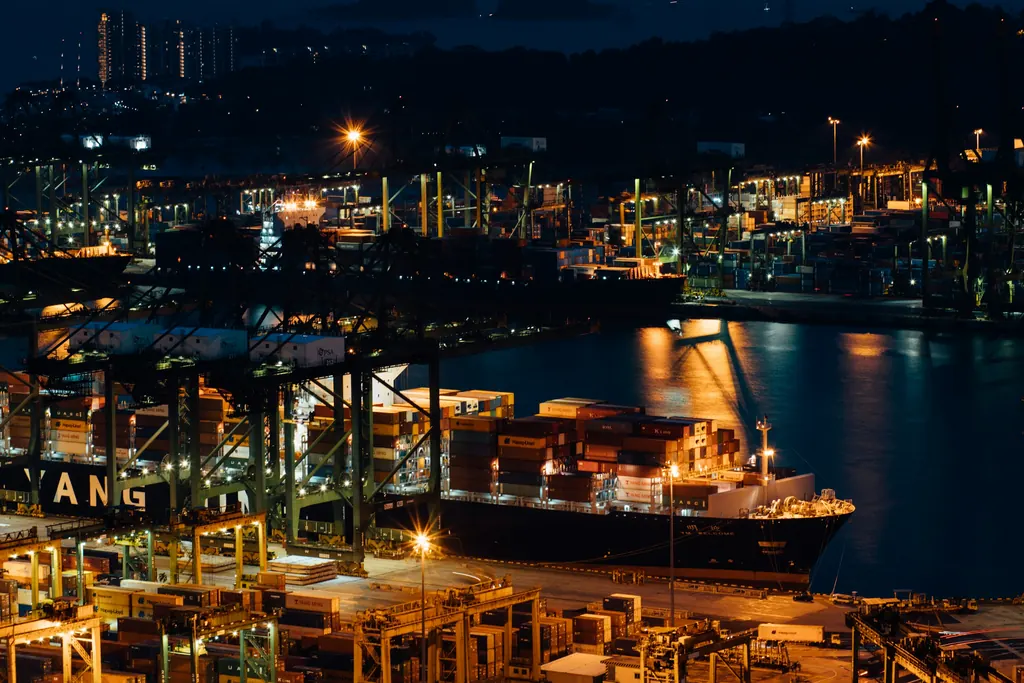
Four terminals in Singapore, Rotterdam, Houston and Fujairah store crude oil, refined products, marine fuels, petrochemical feedstocks and renewable fuel components for more than 60 customers from 18 countries.
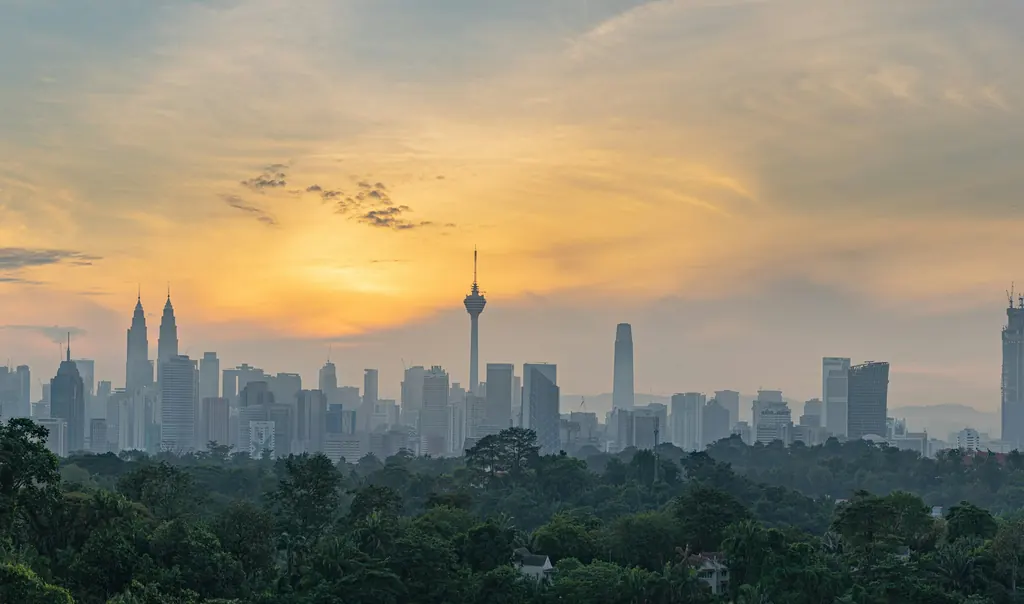
Kuala Lumpur · Singapore · Rotterdam · Houston · Fujairah
About Asian Oil Storage
We started in Kuala Lumpur in 2017 as a small team of terminal engineers and infrastructure advisers. Nine years later, we own and operate 3.18 million m³ of storage across four of the world’s most important energy hubs. The engineering discipline we started with still runs through the business.
Company Overview
ASIAN OIL STORAGE SDN. BHD. is a private limited company incorporated in Malaysia on 24 January 2017 and registered with Suruhanjaya Syarikat Malaysia (SSM) under registration number 201701003035 (formerly 1217185-M). Our principal activity is the construction and the operation or development of oil and gas storage infrastructure.
We are independent. We do not produce, refine or trade oil, and we hold no commercial position in the products we store. Our customers keep ownership of their product, and our job is to keep it safe, on specification and ready to move.
In practical terms, we do three things:
Four terminals in Singapore, Rotterdam, Houston and Fujairah store crude oil, refined products, marine fuels, petrochemical feedstocks and renewable fuel components for more than 60 customers from 18 countries.
We plan, engineer and deliver new tanks, berths, pipelines and whole terminals, for our own network and with partners.
Our consulting practice has delivered 34 infrastructure and consulting projects in nine countries, from feasibility studies to preliminary engineering. The most prominent is the Borneo Oil Storage Terminal.
Four Corridors strategy
2020
Our Story
Asian Oil Storage began with a straightforward observation. Across Asia, demand for storage was growing faster than the capacity to plan and build it well. Our founding team had spent their careers at refineries, terminals and engineering contractors. They set up the company to close that gap, starting with feasibility studies and front-end engineering for storage developers in Malaysia and the wider region.
In 2020, the board approved the Four Corridors strategy: to own and operate terminals at the world’s most important energy trading and shipping hubs. Between 2021 and 2024, we acquired and upgraded operating terminals in Singapore, Rotterdam, Fujairah and Houston, investing in expansions and modernisation at each one.
In 2025, the four terminals became one integrated network. They now share a common terminal management system, common HSSE standards and a single commercial team.
Read Our Full HistoryTo build and operate strategic storage infrastructure that makes global energy supply chains more resilient, more flexible and better connected.
Energy supply chains are long, exposed and exacting. Storage is what gives them resilience, the ability to absorb disruption, and flexibility, the ability to respond to price, demand and timing. Our mission is to provide that capacity in the right places, run it to a high standard and connect it into a network our customers can use.
To be a recognised independent energy infrastructure platform, connecting strategic storage locations across the world’s principal energy corridors.
We want Asian Oil Storage to be the first name customers think of when they need independent storage at a strategic location. We also want partners and governments to see us as a capable developer of new infrastructure where it is needed. Our aim is not to be the largest storage company. It is to be one that customers can rely on in every location where we operate.
Values
Infrastructure performance begins with safe operations. We stop work when it is unsafe, report incidents openly and learn from every near miss. Nothing we store is worth an injury.
Decisions are backed by technical rigour. We test assumptions, follow recognised standards and write down our reasoning, so that decisions made today can be understood by the engineers who maintain the asset in thirty years.
Customers depend on predictable infrastructure. A vessel that berths on time, a blend that meets specification and an inventory report that matches the tank all build trust, one movement at a time.
Long-term relationships need transparency and accountability. We keep our word, report accurately, and treat customer information and product with the care owners expect.
Terminals serve for decades. We plan infrastructure around long-term supply-chain needs and the direction of the energy transition, not just this year’s market.
Complex infrastructure is never delivered by one organisation. We work openly with customers, contractors, port authorities, communities and governments, and we share credit.
Leadership
Our executive team brings together more than 200 years of combined experience in terminal operations, refining, engineering, infrastructure finance and energy markets across Asia, Europe, North America and the Middle East.
Global Presence
Our consulting and project work has also taken us to Indonesia, Vietnam, the Philippines and Brunei.
| Location | Role | Facility |
|---|---|---|
| Kuala Lumpur, Malaysia | Group headquarters, engineering and consulting centre, Network Performance Centre | Corporate office |
| Singapore | Asia Pacific hub and commercial centre | AOS Jurong Energy Terminal, 820,000 m³ |
| Rotterdam, Netherlands | European hub | AOS Rotterdam Botlek Terminal, 760,000 m³ |
| Houston, United States | North American hub | AOS Houston Ship Channel Terminal, 640,000 m³ |
| Fujairah, UAE | Middle East hub | AOS Fujairah Marine Terminal, 960,000 m³ |
Corporate Statistics
2017
Year founded
3.18M m³
Storage capacity
60
Storage tanks
18M tonnes
Annual throughput (2025)
20
Berths
114 ha
Terminal land
240
Employees
34
Projects delivered
Figures as at 31 December 2025.
Engineering Philosophy
A storage tank can serve for fifty years. We weigh capital cost against inspection access, maintenance intervals, coating life and the likelihood that the tank will change service. The cheapest design on paper is rarely the cheapest over the tank’s life.
We follow the hierarchy of controls. Where we can remove a hazard through layout, segregation or inherently safer design, we do that before adding procedures or protective equipment.
We design to recognised codes, including API 650 and 653, EEMUA 159, IEC 61511 and NFPA 11, as well as local regulations. Where our own experience says a code minimum is not enough, we go further and record why.
Every significant design review includes people who will operate and maintain the asset. The most useful comments on a piping layout often come from someone who has had to isolate a valve in the rain at 3 a.m.
Pipe racks sized for future lines, plots reserved for future tanks and berths designed for the next vessel class keep options open at low cost.
Operational Philosophy
Accurate inventory is fundamental. All 60 tanks have automated tank gauging with independent overfill protection. Our terminal management system reconciles tank, meter and vessel figures after every movement.
Berth time is expensive. Our scheduling teams plan around customers’ cargo windows and let them know early when conditions change.
Each terminal follows its local regulations. On top of that, we apply one group standard for operating procedures, permit to work, management of change and incident reporting. A customer using two of our terminals should see the same discipline at both.
We track leading and lagging indicators, publish our safety and environmental results, and use near misses as learning opportunities rather than statistics to minimise.
Next steps
Whether you are looking for storage, a development partner or a career in energy infrastructure, we would like to hear from you.